 Apple Podcasts
 Spotify
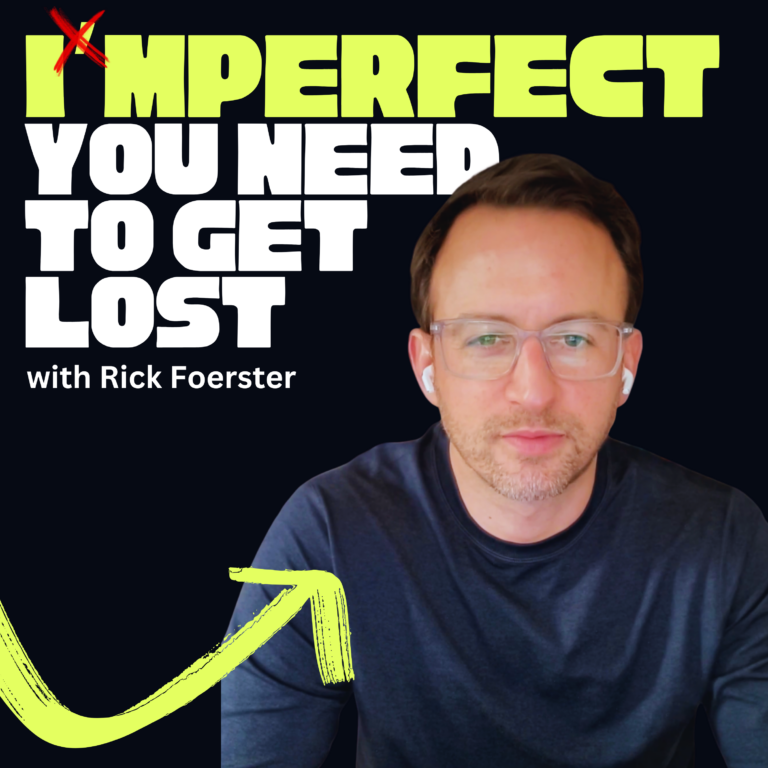
Rick Foerster spent 12 years at a healthcare startup, from early employee to public company exec managing hundreds of people. He built the network. He accumulated the war chest. He had 100+ company ideas ready to go. He was standing at the starting line of what he thought was his entrepreneurial dream.
Then he “went dark”.
What was supposed to be a three-month sabbatical turned into two years of what Rick calls “the wilderness phase”. No networking, no building. Rick wanted to figure out who he was when he wasn’t on the hook to do anything.
Now he’s writing post-apocalyptic fiction, has a completely different relationship with work, and believes most of us need to get lost before we can actually find anything worth doing.
We talk about why his executive coach told him to disappear, what led him to writing about his experiences on Substack, the trap of suppressing existential questions with productivity, the “first mountain vs. second mountain” framework, and why following weird creative interests matters more than having a plan.
Resources mentioned
- Rick’s Substack: https://www.thewayofwork.com/
- Book: Working Identity by Herminia Ibarra
- Book: The Second Mountain by David Brooks
- Book: Transitions by William Bridges
Full Transcript
Mike: Welcome to the show. Thanks for being here, Rick.
Rick: Thanks for having me, Mike.
Mike: So you are an executive, and I think in your Substack description you describe yourself as a pretty big deal, formally.
Rick: Haha, yes.
Mike: You went from this high level executive role to taking a sabbatical to now writing a post-apocalyptic fiction book. How did that happen?
Rick: Yeah, no, it’s funny you called that out. One of my book ideas is “Memoirs of a Very Important Businessman” or something like that, just poking fun at myself and my self-importance, especially with my former life.
But yeah, the story goes: following college, I was in consulting for a while, very kind of vanilla boring corporate job. And then after that, stumbled into a healthcare startup called Privia Health, where I was one of the first employees and was there for 12 years. It ended up being a phenomenal success, which is very rare in the startup world. I don’t necessarily recommend that path for most other people.
But we ended up going public and through that whole journey, I had to really reinvent myself several times along the way from kind of a young go-getter, hustler type to a public company executive where I’m talking to the board, I’ve got hundreds of employees reporting to me, all that stuff.
And I went through that journey and after the company went public, I decided that it was time for me to go. The company was getting large again. I was starting to feel suffocated by familiar large company problems. And I’d always had the dream of starting my own company. I was always in love with entrepreneurship. Of course, in my twenties I idolized Steve Jobs, right? Very cliche, but you know, that’s really who I idolized.
And so I thought, okay, I’ve had this startup experience as an early employee. I’ve helped the company grow and become successful. Okay, what’s the next thing that one does in that situation, which is start my own company. So after I left Privia, I decided, Hey, I’m gonna take three months off. I’m gonna get bored and then I’m gonna start this company.
But long story short, the three months ended up being, I guess you could say two years through a lot of twisted turns. Insert a massive midlife crisis and stumbled upon writing over the last about two years, most recently in fiction. So that was kind of the long intro and we can dabble into whichever one of those pieces you want to go.
Mike: I guess what I’m curious about is you said that you left that role already thinking, okay, well I’ll just take a short break and then I’ll go start a company ’cause that’s what I really want to do. And then that got extended to like a two year sabbatical. But like, what actually happened during that sabbatical that made you realize like, actually I need a longer break? Or was it just accidental that you just couldn’t find the energy to start the company? Because I think I read that you had a list of like a hundred companies or something, a hundred company ideas or something like this.
Rick: Yeah, I have a Notion document that has kind of a database of over a hundred different ideas that, even before, had started to build some concepts. And I was really plugged into the startup world, healthcare in particular. We were doing things on the cutting edge before, so I knew VCs and investors and the founder of the last company wanted to back me and help build a new company with me.
And so I had all that support and infrastructure. And I remember when I left my last company, I had a very brief vacation about a week to the beach with family. And I remember thinking like, oh, this is amazing. Like, no one’s calling me. There’s no major crisis that might be happening if I just check my email and so on. And it was fantastic for that week.
But then the next week I just crashed. I was like, what am I doing? Where am I going? Who am I? And so on. And I really suppressed all that angst into trying to start a new company. And so that’s where I got to work on those hundred ideas, filtering and sorting them, building out the ideas, talking to potential customers, talking to investors.
And for the next three months I was just plowing on that idea and concept of, okay, I gotta get out of this angst by filling that hole with the next new thing. But about three months in, things were progressively coming to a head. And I remember this conversation I had with a mentor of mine. She was actually an executive coach of mine while I was at the company trying to become an executive, right? Trying to become a really big deal. And she helped me through that time.
So I reached out to her again and I talked to her and I said, just something doesn’t feel right. Like, I don’t know where I’m going. I don’t know why I’m doing this. Something really feels off. I didn’t have an answer. I didn’t have any alternative path identified to know this doesn’t feel right, and or why it doesn’t feel right. I had no explanation for that and I had no idea what the alternative is.
And she basically suggested that I just go dark. Kind of go off in the wilderness, stop building, stop talking to business people. Get outside your network and do whatever you gotta do. Leave the country, read, write, don’t do anything public. And that’s what I did for probably the next six months after that, where I just went into my hole and took long walks, started writing to myself, which ended up being what I over time published on The Way of Work. And that just going through my angst and midlife crisis is my story of how I kind of worked through it.
Mike: It sounds kind of scary because I mean, you had to basically tap into that very uncomfortable energy of like, I actually am lost and I don’t really know what I’m gonna do. I don’t have an answer. Like the thing that I thought I wanted to do might not be the answer. And also sounds like there wasn’t really a timeframe, like you just like had to go and go dark and just wait and see what happened basically. Or like try a bunch of stuff and see what happened.
Rick: Yeah, no, I think it’s absolutely right. You know, I’m a kind of classic type A high achiever, very high strung, build project plans and goals and reverse engineer to say, okay, I wanna hit this goal and so minus 12 months from there, I need to do this. And then that, and then that. And so, you know, I thought I had that all planned out and I was really on the precipice of achieving my dreams.
Basically, my dreams was I was gonna have this successful startup experience, accumulate a war chest, which would allow me to start a company on my own terms. And I did all that and I was like on the precipice, like about to plant my flag and then I was like, well, why do I wanna do that?
And yeah, I think the whole process that where I went through going dark and I wrote about a lot of these experiences where I tried to disappear. I tried to embrace being unproductive and really resisting all my urges to do things that were things I should do. And instead try to really focus on things I really felt more intrinsically that I wanted to do.
And like, you almost have to rediscover your own wants and interests if you’ve been conditioned for so long to chase some of these external rewards. And it was just kind of that regrounding of myself and then peeling back the layers to say, who really am I? Am I this really important business person, guy? No, I’m not. Right. Am I this worker who am defined by my output? And if I don’t achieve big things, if I don’t make a dent in this universe, then I’m nothing?
I really had to kind of unpack all that about myself because I could have easily really plowed into the next new thing and woken up a decade later and being like, okay, I just pushed off all those existential questions again.
And so that wilderness phase is one of the hardest to explain to other people, because I like this analogy I read from this book by William Bridges called “Transitions.” And in the book he talks about there’s transitions all throughout life. It could be losing a job, it could be going through a divorce, losing someone you love, like through a death, moving. It could be all sorts of transitions.
And most people, when they approach a transition, think of it as crossing the road. I’m on this side of the road and I need to get to the other side of the road as soon as possible. And so the transition, when you’re in the road, the absolute worst thing people think you should do is sit down in the middle of the road, right? You need to sprint to the other side is what people think.
But in my experience, to successfully come out a transition better on the other side, you need to sit down in the middle of all that traffic in the middle of the road or use the analogy of going into the wilderness and getting lost. And you need to sit with the lostness for a long time. It’s very uncomfortable. But ironically, it is by embracing that lostness that you end up finding your way through rather than trying to find your way through immediately from the start, if that makes sense.
Mike: Yeah, that feels very relevant to where I am at right now. I read your article recently about getting lost and I worried that I maybe don’t give myself enough time to actually be lost. And I noticed for myself that the temptation is, as someone who’s ambitious and also does want to get meaning from my work and does try to do work that’s meaningful, I feel like I do latch onto identity as a kind of a scapegoat. Like, yeah, if I would say, okay, well actually the job I’m doing right now as a nine to five isn’t the thing that gives you the most meaning. And then I have that feel like, like that discomfort of like, okay, but what am I gonna do?
I think it’s something that I’ve done naturally and I’m trying not to do as much, is like just latching onto the very next thing. And for me it was very similar. It’s like, okay, well maybe I should go start my own company. That’s what I’m gonna do right now. I have a whole new career path in front of me. Perfect. I have a huge ladder I can climb. Of like starting a company. Perfect.
And it’s like, oh, but maybe something else, right? Maybe it’s YouTubing and podcasting or coaching. Okay, great. I can build a coaching company. I dunno how you avoided this, but it feels like as soon as I would unlatch myself from one identity, I would immediately feel a need to grab another one.
Rick: I think what you’re talking through is very common, if not universal, especially for people in the, in their midlife, what you were saying. I see all the time. And I think it is, especially with social media where you’re exposed to all these other people who have it figured out or so we think, right? And we see their brand and how they live their lives and we see these usually curated versions of it and we think, oh, all these other people have it figured out. Why can’t I?
And I think for me it was really the problem was I was trying to grasp for that permanent one thing, the one thing to rule them all, like, where’s my calling? And why isn’t it presenting itself to me? And life is so unfair ’cause all these other people seem to have a calling, but I don’t have a calling, blah, blah, blah.
And I think that’s a very bad place to be. Now, there are people who stumble into a calling or figure it out or, you know, lucky them at a young age they were presented with this clear path in front of them and it forever worked out. Probably didn’t, but good for them.
I think that for people like us who you don’t feel like a whack in the head around, this is exactly what I should be doing, the answer is ironically, usually not to try and grasp onto the next thing. But to really not be searching for that permanent answer and only try and figure out the next answer, or what am I gonna do today? What am I gonna do tomorrow? What is the thing that, like, what inspires me or interests me? Or it creates curiosity in me today. Not the thing that I like, oh man, if I start a podcast and then man, I just have to do this for the rest of time and I’m not really a podcaster, well, I’ll never be like Joe Rogan as successful and blah, blah.
You know, you can go down these paths of comparing yourselves to future versions of yourself that you never become. Then, you know, there becomes the unfulfillment loop and self-talk again. That’s, oh, you know, this isn’t a good idea.
I think that my situation and my circumstances really enable me to do this a lot. And so I’m grateful for circumstances like having freedom and a lot of financial security to pursue some of these paths, but I really, my frame of reference is not trying to create a goal and then reverse engineer into that goal. It is really to spontaneously pursue interests that emerge to me and not question them, not wonder if they’re gonna be permanent or not.
I just try and do those things, and some of them work, some of them don’t. Just for, you know, me and my sort of post-work transition, right? I’ve tried all different sorts of things. We talked about starting a company, but you know, I considered coaching. I considered being a consultant. I considered advising startups, whether like in a board capacity or in a part-time capacity. I considered doing a nonprofit. I considered starting a podcast. I considered starting a media company, right? Like there’s a huge list of things. And you know, I dabbled in some of them. And then, many of them, most of them I just let go, right? Because, and again, that’s because I’m not grasping, clinging onto these things.
I can experiment with them and test them without grasping onto them. But even things like writing, writing fiction, which we’ll maybe get into more, when I started writing the book I wrote, I just started writing on the page. I didn’t think, well, am I now a writer? Am I now an author? Is this gonna be a New York Times bestseller? Is this my career going forward and am I gonna have to do this for the next 10 years? Or is this just a little project and impermanent thing I’m doing?
That’s like the difference in mindset that I come to now, which is to say, I’m not grasping onto this author identity or career. I’m just writing, which I enjoy doing, and I’ve really continued to find enjoyment in it as much as I keep doing it and I’m gonna keep doing it. And if in a year I don’t like it anymore, then it’s fine. I don’t have that author identity to say, well, I’m gonna discard that and move on.
And so your circumstances are very similar, and my advice is usually to not search for something permanent, but search for the next thing that seems most interesting to you and follow it as long as your interest takes you and then give up on it if it doesn’t maintain your interest.
Mike: It sounds a lot like the tiny experiments approach. I reread this book this year and it was a really good reminder to be like—
Rick: I haven’t read it, but I’ve heard great things about it.
Mike: It was amazing, at least for me, it was a good reinforcement of the idea, basically exactly what you’re saying, which is like you can set yourself for an amount of time or not, it’s up to you, but you can basically set yourself an amount of time and say, I’m gonna play around with this thing. I’m gonna experiment with this thing. I’m gonna get up and write fiction every day for a month, and if I get to the end of the month and I just like, I’m just bored of it. It was fun, but like, whatever. It’s done, then fine. Great. You did the experiment. Yeah. You learn something about yourself, move on. It’s completely fine.
Rick: Yeah, I think it’s great advice. The only thing I would say, and I haven’t read the book, so I can’t argue with it or against it, but the only thing I would caution against is the deadlines and timelines. It’s good and bad. Good in terms of what you were saying there in terms of, Hey, I wanna try a new hobby. I wanna try a new, you know, pick up an instrument, start writing a book, right? Like you need to give it some time because you’re gonna go through that beginner struggle and it’s gonna suck. And the first page I wrote of my book was horrific. And if I just gave up there, I wouldn’t have been able to see where it comes.
So deadlines or timelines can be good for getting through that kind of messy middle of struggling through the middle of something. At the same time, especially if you’re like me, at least as my experience is, you really need to be careful of the, again, the reverse engineering off of the deadline.
And I see this a lot in terms of talking with people who have sabbaticals. My advice is to really stretch the sabbatical as long as possible without deadlines. Now, I know that’s not financially feasible for everybody, but if you give yourself too harsh of a deadline, like for me back to me, the three months is, I’m just too hyper anxious. That three months timeline sounds like a deadline to me where I need to figure out my life by that three months.
And so I back up to that and it’s not a like three months of giving myself room. It’s in three months I need to have this thing figured out. And if you put all that pressure on yourself to kind of back into that timeline again, you’re grasping for something more extrinsic than intrinsic, which is, is this thing really as I try it, as I continually try it, as I even get through that messy middle, do I feel a natural sustainability for it or am I artificially imposing outside rewards or deadlines or whatever that is really driving me to want to continue on that path.
Mike: Do you feel pressure from other people though, who are like Rick’s still on the sabbatical? Hey man, how’s it going? You gonna maybe get a job?
Rick: A hundred percent million pounds of pressure, whether real or real and then probably more likely imagined. On the real side, I’ll just tell you, I got, you know, again, like I joked, I was a pretty big deal and so I knew a lot of executives, investors, people who were interested in my next move and maybe also financially motivated by whatever I decided. That’s kind of like a key little factor you have to consider when taking advice from somebody is how they are potentially incentivized by your decisions. But that’s an aside.
But I got a whole range of things. One is, don’t take too much time off. There is a strong belief I think from a lot of people, especially older people, where you don’t wanna have career breaks. Career breaks signal something is wrong with you. You’re unemployed and you’re undesirable to the world, but also time away, you lose potentially your understanding of, for my case, healthcare, like I’m disconnected from the industry, or I lose momentum on my career. I’ve got this nice upward momentum, and why would I take away that momentum? So the don’t take too much time away approach.
Then there’s the whole like, you need to do something, man, which is the like, what are you retired? Or sabbatical, what’s that? You’re too young to take a break, right? You’ve only been working. I’m 40. So like, you’ve only been working less than two decades. Like most people retire and take time off when they’re 65, right? And once you unpack that, you start to realize how much bullshit is underneath there. But it’s this idea of like, dude, you don’t deserve a break. And that can be a big pressure.
And then the third big pressure, which I still grapple with, I’ll be really honest, is this whole concept of duty or responsibility, which is given my circumstances and knowledge, expertise, skills, background, do I have a duty to the world to do a certain thing? So for example, healthcare, right? Like it’s not like I was selling something bad, right? This was like seriously helping people in a point of need in one of the most messed up systems in the world. If you’re in Germany, I think yours is a lot better than ours, but the US is a mess and there’s so many opportunities to help real people with real problems inside of healthcare.
And so there’s that part of me that says, am I just sort of wasting my opportunity here by not seizing on that duty where I could help a lot of people? That’s something I struggle with, right? Because there’s a strong pull that way. I really believe in, I don’t wanna be a guy that just kind of goes off and plays golf all the time. That sort of pure selfish existence I think is very not meaningful. But at the same time, I struggle with, you know, is my suffering required for me to help other people? Right. And I think the answer to that is no, but it’s something I still struggle with.
Mike: What’s the question underneath? Is it like, oh, if I am, I know you said you want to avoid labels, but if I am an author and I’m publishing fiction books, then I’m having less of an impact for the good of humanity than if I would actually go back and be an executive and make sure—
Rick: Well, if you look at like a popular philosophy, whether explicitly or implicitly is effective altruism or, you know, kind of a form of utilitarianism, which is sort of like you look at your work and you multiply your amount of impact per person times the number of people you impact. And it’s this like simple equation. You can, you could go online and I think it’s like 10,000 hours or something like that dot org, like really just spell this out in terms of like, this is a simple formula.
And so, for example, you could be a doctor who performs surgery and you’re going to help less people but very directly, or you can be a researcher and create some vaccine and that’s going to help a lot of people maybe in a smaller way or more diluted way. Obviously it helps certain people a lot. And so that thinking is, it’s just like, it’s this formula.
But something about that doesn’t sound right to me. There’s something that doesn’t sit right again, back to, well, if I am in a circumstance where I could impact a lot of people and impact them deeply, but I hate it the whole time, is that a life well lived?
And for these type of questions, I think a lot about my kids, my kids that are five and seven, and the world is changing very rapidly, obviously with things like AI. So really trying to think about their future, what would I advise them in the circumstances that I’m in? And when I think about them, I think of, yes, I want them to be helping people, making an impact, but I also don’t want them to live a miserable existence where every day is torture. So there’s gotta be a balance in there where both things can be true.
Mike: So the really funny thing, I think the very first episode of this podcast, I had a friend of mine, Phil Bennett, on the show. I think in the episode I say something where I’m like, but what if I just wanna write books or make art for a living? And I think it’s irresponsible. Something like, well, that’s underestimating the value and the impact of what, like entertainment and stories, right, can do for the world and do for people. Right. Like that actually, yeah, like how do you measure the value of that anyway compared to anything else? Like of course stuff like being a doctor is probably quite easy to measure the impact of that, but maybe it gets harder when you think about like creating stories, like the impact is a completely different style of impact, but it’s still impactful, right? You’re still having a meaningful impact potentially on many, many, many people all around the world.
Rick: I think we underestimate a lot of those softer sides. Being a good citizen, being a good neighbor, raising a family where you know your kids are balanced and go on to live a strong, meaningful life. Right? There’s plenty of people, I don’t even need to name any of them, you can think of them, but who are highly successful, highly impactful on a business global scale, but their relationships are an utter fucking mess. And their kids are basically all probably living tortured existences because they didn’t have the love of their father growing up.
And so I think that, I think you’re right, that these softer sides are impactful. And, you know, maybe I’ll do a little bit of transition into some of the fiction stuff where, you know, I was finding in my own writing. So I write this kind of newsletter, The Way of Work, which really focuses on work, but tangentially a lot around meaning and identity, and midlife kind of reinvention and things like that.
But over time I was kind of feeling like, okay, I’ve told my story in a lot of detail. I don’t know how many more times I can tap that well without a little bit more, like the therapy chair to go back to repressed memories. And so I’ve tapped that well and also I just kind of, honestly, I was just feeling a little bored with it where I was like, I’m just writing self-help essays, I guess.
And so, you know, I started writing this story. The plot or setting is a post-apocalyptic setting that zeroes in on an orphan who is trying to navigate total collapse around him physically and psychologically. And how that orphan, despite all odds, would sort of navigate that situation.
And as I was writing that, I was like, huh, all the things that I write about before, meaning, identity, and so on, that’s all really embedded in here. And so why don’t I address those deeper themes within a fun plot. I always like the analogy of The Matrix, right? Which is on the surface The Matrix is like, super cool CGI and like doing flips and dodging bullets and cool action scenes. But on a deeper level, it’s really an allegory about man versus machine. This great philosophical question of is life really a simulation and has themes about like escaping a default life and so on. But it’s all hidden within this very cool actiony plot forward story.
And I thought, why don’t I try and do the same thing? And so that’s what I’ve tried to do, is communicate some of these deeper, heavier themes within a totally made up story, which for some reason almost feels like I can sort of access the truth better through the imaginary than if I tried to retell my childhood, which would totally be boring and uninteresting, might be true, but no one would wanna read it.
Mike: Have you done fiction writing earlier in your life, or it sounds like you had this idea kind of organically from writing lots of nonfiction and then being like, oh, maybe fiction is a way to explore it, but it like never came up earlier in your life?
Rick: No, no, no. And in fact, I’m thinking about after we were scheduling this, I started thinking about like a post of something like “How to Be Creative If You’re Not a Creative Person” or something like that. I gotta work on the title, but you know, there’s really no evidence that I’m like an artsy or creative person. Never liked art, not into drawing or painting. I was never really into music. I did it ’cause I kind of had to, I think. I never wrote stories to myself or anything. I hated English class.
And so there was all this kind of evidence that Rick, you’re just a practical, boring man. So just do practical, boring stuff. And that’s why the business world worked great for me for a while, but I had this kind of no evidence of like, you know, deeper creativity or artistic sense.
Like I said, when I was doing this writing, I’ve always loved reading fiction. That’s always been a part of me. So I’ve read way too many productivity, self-help books too, but I’ve always been into kind of sci-fi fantasy reading, very kind of out there type of stuff. It was always a fun way to sort of detach from the real world, maybe in a partially escapist way. But a lot of the best sci-fi fantasy allows you to kind of think about real life, but in this kind of fantastical universe.
And so anyways, I always really enjoyed it and I had this kind of just idea in the back of my head of like, what if I wrote a fiction story? And I’ll be honest with you, I didn’t outline this. I didn’t develop a huge plot. I really started with a simple prompt, which is, and I’m really sorry, but I’m going to spoil this book if you haven’t read it, The Road. So if you wanna pause, I’m gonna spoil it.
But I started with a simple prompt to say, what if we follow the little boy in The Road after his dad dies? Like, where does that take him? And that immediately helped me sort of picture the setting and the mood and the, to having total nothingness in life. Very little support as a vulnerable orphan. And that’s where the story came out, is that very small, simple prompt. And I just sat down one Monday and I started writing on a Google Doc with only that prompt and it sucked. Like I said, the first chapter really sucked, it’s been revised about a hundred times.
And then I sat down Tuesday and I wrote some more, and then Wednesday, and then the ideas just like exploded out of me. I couldn’t stop for like six months. I’m still on it. And just the ideas came out of me and I would’ve never predicted again. I keep saying like, reverse engineering, I gotta find a new way to frame this so I don’t repeat myself, but like if I had reverse engineered to say, oh, I wanna write a book. I want it to be this type of book. I want it to be popular in this way, or sell this many copies. Or like, if I had tried to create that vision and then re-engineer from there, I would’ve never gone through these initial steps just to, let’s see where this interest takes me. And then it turned out, it took me very far.
Now we could be having, you could have this conversation with someone else where they sit down and they write Monday, Tuesday, Wednesday, even. Let’s say they do it a month, and then after the month they’re like, Mike, this still sucks and I hate this. Like, this whole process sucks. Well then fine. Like, you don’t need to kill yourself and torture yourself. But again, you don’t necessarily know unless you try. So that’s my journey.
Mike: You mentioned that you have this kind of like passion for it now where all the ideas are like overflowing and you’re just like obsessing over it. And I wonder how do you actually practically stop that voice coming back that’s like, you’re gonna be a bestselling author and you’re gonna make this the best thing ever and you’re gonna learn everything and you could use this tool, you could optimize your workflow like this, and you could get a writing group and feedback and blah, blah, blah. Like all of this stuff. I don’t know, maybe it’s different for you. Did you have that onslaught of like, you know, expectations and pressure and ideas and like process and like how do you stop the flow, you know?
Rick: Yes. Yes. A hundred percent yes. I would say luckily I’m more mindful in this stage than I was maybe like earlier in my career, but a hundred percent. The funny thing too is everybody likes to think, Hey, it’d be so great to have an existing audience and if you’re a writer then it’d be, you know, readers and so on. It’d be really great to have this inbuilt audience that when I publish my next thing, I just have this huge audience.
It’s true in a lot of respects, but also not having an audience frees you from expectations quite a bit, and that can be a very freeing process. So I think that was one thing where I didn’t really have to fulfill expectations. I just did the thing and enjoyed doing the thing.
Now, invariably, when you start to really get into any project in any depth, I’m sure you know the same with podcasting, your imagination starts to run wild. Where could this go? And all that different things. And to your question, it’s like, am I really this type of person? What would this type of person do? What are all the tools and things that I need to do then?
And some of that stuff, honestly can be useful, right? It’s not like when writing a book, it’s helpful to talk to people who’ve written a book and figure out what works and not, and learning how to write sentences and stories and all that stuff is super valuable. I think it just goes back to the concept that we were talking about of like not falling into the new identity and new culture. And creative culture has its own thing, as I’m sure you and your listeners know, right? Where like, artists are these type of people who think these type of things. And you know, we go to coffee shops and we wear these type of clothes and, you know, like our backgrounds have these type of visuals behind us. Like right, there’s all this kind of like identity stuff wrapped up even in a creative culture too.
And the key is to just not chase any of that. It is really to say, I am writing, am I a writer? I don’t know. Maybe someday I’ll come to that conclusion, but I am just going to keep doing the writing that gives me intrinsic joy.
I will say too that over time I have like, when it comes to writing, like the business side of my brain has popped on in terms of things like, how do I get this published and what’s the market for this book? And, you know, some of that has actually been kind of fun to sort of tap into that business side again of like, oh, this is actually a product which I’m trying to sell and I’m trying to find my customers and what’s the right outcome? And what am I really, what is the outcome that I’m trying to get to? Is it really money? Is it trying to get readers? Is it trying to just continue writing?
And so I think just being mindful through this whole process in terms of what you are actually doing and trying to do, and then being wary of those ditches along the way, that can bring you back to the problems that got you here in the first place. Right. All that’s important.
Mike: It sounds like a lot of it is also just like regularly checking in for yourself if you’re really enjoying the thing, if you’re pulled to do it, or do you feel pushed to do it and like how much are you like actually enjoying it?
Rick: It’s a very subtle distinction. Right. And I don’t know, I don’t know if I have a good answer in terms of how you separate the two and certainly, you know, I’m like bouncing. I may be contradicting myself in some ways when life is all paradox, but I think that in terms of like my post-work angst, that fueled a lot of creative energy too. And I would say a lot of the book, the fiction book I wrote was based off of my fear of death and my fear of losing loved ones.
And so is that good motivation to be sort of fueled by some of these fears or these angst or these issues and anxieties? You know, where’s that like negative fuel? Right? It’s kind of hard to know because a lot of the writing has helped me actually also process a lot of those feelings and emotions. So I think that’s very positive. But then you could kind of say like, well, are you drawing from a bad source? Right. It’s the songwriter that writes a hit song after a breakup, right? Like, okay, is that positive energy, is that negative energy. Right? And it’s sometimes hard to know.
All I can tell you though is that tapping that creative fuel is really an enjoyable experience. Whether the fuel itself is negative or positive, man, it’s a good hit.
Mike: This is something that I sometimes struggle with. I kind of enjoy it, but I struggle with it too. Like when I get hit with an idea or like something is really taking my attention creatively or otherwise, it’s like so hard to turn your brain off. At least for me, it’s like I really, I’m writing so much more on my newsletter, and the more I do that, the more I get into it and then more ideas I have. And then, you know, like, am I eating breakfast with my girlfriend? I’m like, oh my God, I have to go write. Like, I’m so sorry, but like I just have to go, I have to go write this down.
It’s stupid. But like I need to do like somehow then I question that and I’m like, what am I doing? Like I’ve just replaced like a work obsession. My, my nine to five career path is taking less space in my brain. Great. But now I have this like uncontrollable, like the tap is fully turned on and I can’t get a, yeah, like I can’t, it’s not a reliable stream. It’s just like it comes out full blast and I have to go and do all those things and I’m like, oh, that’s not sustainable. Like, oh, with the podcast, like, oh, I could do this, I could do that. It’s so hard to find the right. I don’t know, maybe there is not a right way. Maybe it’s just go with the energy and yeah, screw it.
Rick: I think that in a lot of ways tapping into that obsession is a beautiful thing. And I mean, like anybody who’s been in that sort of idea flow state knows what we’re talking about. Where man, it’s just like a beautiful thing and you don’t wanna turn off the faucet. You want it to keep going. In fact, in a lot of ways you worry that it’s going to end and it probably will end, right, at some point.
And I have the same issues around, when I was in the, really, the kind of meat of writing the book, I’d be sitting at dinner with my family, my wife and two kids, and they’d be talking about something and I’m just like, drifting off and I’m like, oh man, this would be a really cool scene in the book. And oh my gosh, I gotta go write it down.
But then at the same time, wait, like a lot of that behavior is kind of reminiscent of like my workaholic days of like, I’d get home from the office and my mind would just be still running and ruminating. And some of that might have been stress that really hadn’t been resolved. And what’s the difference between the two? You know, it’s hard to know.
I think you just sort of have to try and be as mindful as you can in this process. But at the same time, if you fall in love with something, someone like, it’s always best not to question it in some ways. Right? Like, do you really need to over intellectualize this problem of falling in love with something? I don’t know. Certainly I’m sure there’s reverse rebuttals to that case that you can easily come up with, but I think it’s allowing yourself to fall into the flow of the experience, but then also picking yourself up continually to say, is this a positive flow or is this a negative flow?
Because I don’t think you can kind of a hundred percent be in the flow of an experience, right? You gotta go to bed, you gotta do other things in your life. You gotta go to work, you gotta do the dishes, so on. But then at the same time, like if you’re over intellectualizing everything, then you’re not really in the moment, you’re never getting into those flow states, which are really very powerful and positive. I don’t have an answer is the answer.
Mike: Maybe the concept we’re talking about is similar, but I’ve heard of it described as like distress versus eustress. Like the idea that like maybe not all stress is bad. There are like, it’s more complicated than that in reality. Like there are some things that are gonna stresses in a way that might not be that bad for us. And there are of course, things that are gonna stress us and be very bad for us, but if we lump it all together and we associate all stress is bad, then that’s not really helping. The only thing that that will do is make us feel guilty for feeling stressed, even if it’s coming from like a positive creative space. But probably easier said than done. Right?
Like, this is a complete segue as well, but I wonder if, for you, when you started writing fiction, was there any part of you that was like, yeah, but this is kind of silly. Like, what am I doing? I’m not an author. Was there any fear associated with even telling people, I’m writing fiction?
Rick: Oh, a hundred percent. I still struggle to tell family and friends that I wrote a book. In fact, it’s very common in family gatherings for, you know, somebody asks like, Hey Rick, what have you been up to? And I’m like, ah, you know, same old. And then my wife will be like, he wrote a book. Like, and that’s, she’s the spark. She’s the spark to generate the conversation. It’s almost like I’m embarrassed about it a little bit.
And I do think in a lot of ways it, for whatever reason, I’ve always respected writers and they’re probably all my idols are writers, I would say. And so I respect the profession and I take people who have written great work very seriously. And at the same time, yeah, it does feel like a childish pursuit. It’s very kind of odd dichotomy. And that’s why I’ve tried to resist. Like I kind of know that, like I feel these things are, I wouldn’t say knowing these things are childish is the wrong way to put it. There’s a part of me that is saying, Hey, this is a childish thing. And then there’s another side of me that’s just like Rick, that voice is BS. Like, you know, do the thing.
But yeah, I think that we have a certain value to different pursuits in our life. And I would say in especially in America, heavily capitalist society, everything is a question of can you monetize this or that? Even your hobbies now, everything is, you’re really into making model trains. Can you monetize that? Can you become a creator and have a YouTube channel where you monetize that passion? Everything is just really a question of what’s the monetary value that it generates? And when we reduce all these activities to that basic concept, you lose a lot. There is a ton of things, most good things in life. Love, meaning, connection. Like you don’t actually monetize any of that stuff. There’s no market for it. The best things in life don’t have a monetary value, and yet we try and qualify it for that. So I think that’s where a lot of the childish view comes in.
I think there’s also a nature of a lot of artistic pursuits, which are the most likely outcome is you are irrelevant. It’s a nature of, and I’m sure podcasts has like, you know, the power law distribution, right? If I’m naming it correctly, but like music, writers, right? It’s the 0.0001% that actually become very popular and big. If you’re not that, then it’s a childish, useless pursuit. But I guarantee you, if I became a New York Times bestseller and sold 10 million copies of my book, everyone would be like, wow, that’s so great. Right? We’d be having a different conversation about how can I chase my dreams of writing a book that makes millions of dollars and things like that, right?
And so I think artistic endeavors really are most likely irrelevant, so they’re going to be seen as irrelevant by most people. And I think that luckily there are creative artistic people who understand the intrinsic value of these things, and they will appreciate it and they will see the value. Most people won’t. I mean, I don’t know any other way to put it.
And I think that for people who might be listening who are kind of thinking like, oh, well how do I make my creative endeavor, you know, artistic endeavor more serious and be taken more seriously? I think it’s probably the wrong question to ask. It’s really, again, trying to anchor in that trying of extrinsic proving somebody else a point versus sort of intrinsically loving the craft, appreciating it for its own sake, and trying to come at it from that perspective seems like a lot more of a positive route.
Mike: It feels like, if you would, I would think that if you ask most people, would you rather do something that earns you money but you hate it or do something that doesn’t earn you that much money, but you feel this like creative passion and you’re super fulfilled and you really, really enjoy it, that they would want to at least spend some of that time doing the creative thing, right? Like monetization just cannot be the goal of most stuff in your life, I feel like, which is again, something I’m just saying to myself to remind myself.
Rick: I have this incomplete thought that I’ll share with you, and so I allow myself to revise myself in the future, but a lot of people think that the best work is work that will pay them a lot of money. You know, you get paid to do the thing you love. I actually think that the best work is actually work you would pay to do. Would not only be free, but it is so good that you would want to pay to do it. You’re willing to lose money to do it. And maybe that sounds like a hobby and maybe that’s what I’m describing.
I really think that the best work is not necessarily like if you ever get to a place, I’m in a very lucky financial situation and have, I’m very privileged to have the success I’ve had at a young age. And at the same time I also know a lot of people who are very well off. I think the irony is that even when you have enough money, there is still a seduction to the pull of money of any kind. And it warps your sense. It’s everything we’ve been talking about. It warps your sense of value. What is good in the world.
You might have a business opportunity, say, just a simple example, someone could come to me with a business opportunity, a consulting gig or whatever, and say, we’re gonna pay you a lot of money for very little work. And I could look at that and be like, wow. It’s like, look at all the things I could buy with that. Or I could give away the money or, it’s just very concrete value that I get in return. But then when I disconnect the money for that and say, well, would I do this if I wasn’t paid? I wouldn’t.
And I think that for people, especially midlife and up who have maybe secured a level of success, they’re still too seduced by the value of money and it warped their understanding of what they should or should not be doing. And that’s why people wake up later in life and be like, well, why didn’t I do what I really wanted to do? Well, you chased the things that you thought you wanted to do. It’s not, it’s self-deception. It’s not, no one’s deceiving you except yourself.
Mike: I mean, it is such a tricky thing when it comes to the financial situation because this even goes back to like Tim Ferriss and The Four Hour Work Week where I hope I’m not misquoting and getting the wrong book, but I think in that book he mentions like a lot of people would come to him and say, I hope I will eventually be financially free ’cause then I can like travel the world or quit my job and write fiction.
And then he asked them, okay, well how much money do you think you actually need to do that now? And then they break it down and it’s like, oh, well yeah, but oh yeah, well, okay, maybe it’s only a thousand euro or, yeah, well it still doesn’t quite work for me or whatever. Yeah, I don’t know. It’s just, it’s weird that we set something like arbitrary, massive goal and are like, oh, only when we reach that goal, only when we retire and we then do the thing that really actually fulfills us and we really want to do.
I still have this battle where I’m like, you know, again, I’m doing all these things that creatively fulfill me. I’m doing the podcast I don’t expect to make much money with, but I’m writing both fiction and nonfiction a lot more in my life and really enjoying that. But there is a thing of like, well, I’m not in a position where I can just quit my job. So I do have this battle where I’m like, okay, well what am I actually gonna do then? Like, do I keep the job and accept that most of my days will go towards making pretty good money so I can do all the other stuff in my free time? Or do I really want to pick one of these things and monetize it? So I can do less of the thing that is not as exciting. Like it is a challenge. And I, I mean, I don’t think there is one easy answer to that question.
Rick: But the problem is when you, what we’re, what you said in there, which is the either or thinking, it’s like I either do one extreme or the other extreme. And the one extreme, what you were referencing there with Tim Ferriss, and I see this a lot myself, is the, I’ll wait until I’m ready to do X, Y, Z. You know, the reality is we don’t know how long we’ve got, and a lot of people are content, I don’t wanna say content, but they feel as though they should torture themselves for this long-term goal of freedom, which—it’s a whole other topic. I’ve written a lot about freedom and how it’s not as good as people think it is. And I really believe that if people tie themselves too strongly to this idea of freedom, they’ll be disappointed when they get to the other side of it, when they realize, oh, this is just a stepping stone and I need to figure out what next that I do.
So I think that frame of thinking is problematic. I also think that the, I’ll just quit my job and pursue this creative endeavor is also, maybe it works. I mean, I guess there’s, you know, you can always find a story of somebody who figured it out, right? But it’s very unlikely, at least where I, we could probably agree. It’s unlikely to work out. And I think that being naive, that artistic or creative, or let’s just say being naive to think exactly what you wanna do is therefore going to automatically have a financial market to pay you to do exactly what you wanna do. I think you’re being very naive if you think like those things will just mesh in this, I hate the Venn diagram of the guy and, yeah, the ikigai. Yeah. Like everything is just gonna merge in this perfect Venn diagram. And it’s like, that’s a theoretical concept, dude. Like, it’s not real life. And you might find that moment for like a second and then the next second like this, the circles spread apart from each other. So I think it’s very naive to think that.
I do think though, I mean, I’ll just give you the honest truth. Like I have this saying, which is like, the best way to become a rich writer is to become rich and then become a writer. Because I just think there are like way better ways to make money. And if you look just practically at anyone doing some sort of creative pursuit, certainly more on a full-time basis, I basically guarantee you 99% of the time it was funded by something else, at least at first for a while. Or it’s funded indirectly through some other means.
And this is especially true of the creator universe, where people are making YouTube videos or podcasts and you know what they’re really making money from is this side product or side solution. Or they really have a full-time job and that is funding this project or they saved up money or they have a nest egg or their parents, they’re trust fund babies or like something, something is funding this enterprise, at least for a long time. I’m talking like 10 years, because that’s usually at least what it takes for a lot of these overnight successes to become successes.
And only then after you go through that sort of ramp up period, do a few people find stability. And even then you talk to, as I’ve written one of the authors I like polling is Brandon Sanderson, who has a really great, if anybody out there like, look up Brandon Sanderson lectures if you wanna learn how to write stories and write books. But this guy has sold hundreds of millions of copies, like he doesn’t need to work ever again, but he’s writing like three books a year at like a nervous, you can just tell he is like at a nervous pace. And I think a lot of it goes back to this insecurity. I don’t wanna project on him, but I, for a lot of people it’s this sort of insecurity that like, if I don’t write my next thing or have my next output, that I’m gonna lose this thing that I’ve got.
And so there really is no point of stability in any of these creative endeavors or really like many professions anymore, where like it’s just set it and forget it and you’re good. And so, back to your question, I think you really should be thoughtful about how you, if you wanna do something creative, there is sort of a menu of options. One is to quit everything and do it right now, highly risky. The other is to wait until everything is, the stars are aligned and it’s perfect. It’s never gonna be. Then there’s a bunch of middle stuff, which is you have full-time job and you do it on the side, or you save up for a period of time and then take some time off. You maybe try and if you’re in a horrible job that is meaningless, you try and find a less horrible, slightly more meaningful job, and you stair step your way that way. But in all cases, the funding almost universally comes from somewhere else. I mean, just dig under the surface of any of these people.
Mike: I think it’s something that I’ve learned from doing this podcast, even though what I describe is like, I have that temptation to fall into this like either or thinking. I think the reality is like from talking to so many people doing creative work, is that there are so many options and there are always more options than you think. And yeah, no one really has it all figured out. Like everyone I’ve spoken to is like, oh no, yeah, I work three days on the side, or I also have a coaching business which funds my filmmaking business, or whatever it is. Right. There are so many different approaches that you can take and yeah, probably the reality is a bit less glossy.
Rick: Yeah. And I think the other reality is like many people are making much harder sacrifices than most people would. A guy that comes to mind is Paul Millerd, The Pathless Path, who, I don’t wanna overshare, you know, but you know, he, I think he’s publicly been very clear about his circumstances. He lives abroad very cheaply. He lives on a very low income per year. He doesn’t own a home, he doesn’t have sort of a lot of the long-term stability of a huge 401k and things like that, but those circumstances has allowed him to live a pretty remarkable life.
And I think the problem is when people try to have it all, like, I wanna live in a high cost area with a huge mansion and send my kids to private school and have two luxury cars and blah, blah, blah, blah, blah. Right. And then I also want my art to support my lifestyle. Well, you’re just being naive, I’ll be honest with you. Right.
Like, the reason I’m here, I’ll let you be very honest, the reason I’m here writing fiction post-apocalyptic fiction about the end of the world or whatever, is because I worked really hard and I also got lucky in a business enterprise that is funding this stage of my life. It’s just like, I’ve made $0 from my writing. I may never, I probably on this book will lose money. Like I said, it’s more likely that I lose money on writing this book, even if it’s a great book.
And so I just think be honest, and if you’re honest, then you can kind of take practical steps to say, okay, I understand the situation. I’m not deceiving myself. I still wanna do it, but I need to make these sacrifices in order to do it. That’s great. Like, God bless, I really wish more people would take steps like that for all the reasons we’ve talked about.
Mike: How much is the, like a background pressure for you? Like, okay, but if I don’t, if writing fiction isn’t the thing, then what am I gonna do? Or at some point I’ll run out of money, so then what am I gonna do?
Rick: I’ll figure it out honestly. Yeah. No, I really am comfortable that I’ll figure it out and I think that, let’s be honest and clear, like I have more financial runway than I think most people do. It’s not like a six month sabbatical type of thing. And so I have a lot more runway, and at the same time, there’s a lot of scenarios where I can run outta money fast. It’s very easy to do so too.
But I guess I’m confident in my ability to figure it out when the time comes, if I need to pivot. Like all the things we were just talking about. Right. Like, which is okay, I live in a high cost living area. I live outside of Washington, DC and we’ll move out. Don’t need to have as nice of stuff. I’m trying to work on my long-term health and so I’m working with a personal trainer right now. Like, I’ve got back problems, like I’m really spending a lot of money there. Okay. I don’t need that. Right.
Like, so I think it’s, we’re talking about a whole other topic too. When, just going back to your thought before about like having a number and like, I’ve gotta reach this number and stay, one of the biggest problems I see in the financial independence or FIRE movement is this concept of a concrete number that you get to and then check, you’re done, when the reality is life is far more dynamic before and after where, if you approach the problem with more of an adaptability mindset, which is a little bit more like Paul Millerd, the example is like a more extreme example, but you know, I will be adaptable to my circumstances and twist and weave as I go.
Then you can actually, I think, find a lot more flexibility and freedom earlier than if you’re like, I need this perfect number on a spreadsheet where everything adds up and I’m done. You know, that’s different. Yeah.
Mike: And it’s not gonna work out well for you. It seems really freeing to be like, yeah, I’ll figure it out. Like whatever it is the situation, I can figure it out. I have options. There are always things you can tweak in life. I mean, right?
Rick: People need to assess their own situation and so if they’re not like me in terms of having as much of a war chest or runway, then take stock of other assets where it could be your professional assets of like, I have a really good network. I have a good job, or I have an expertise in demand, and so on. Like, there are these other assets that you can accumulate to say, huh, like, you know, I can potentially have all these, you know, if I were to take a year off as an example, like I wouldn’t actually lose as much momentum or opportunity as I think.
Now the other case, like listen, like listen, if you’re 20 years old starting out and you’re massively in debt and you have no skills or expertise in anything, like, buckle up buddy, because like you, you’re gonna have to, like, there’s just no, you cannot have it all, right? Like, that’s just the way it is, right? And so, take my advice or situation with a grain of salt or in context or the nuance, right? It depends on the person. And so to some people I’m a privileged asshole. That’s fine. Like, I get it. And some people, like my advice is fresh and welcome because it matches their mentality and circumstances. So yeah, it is what it is.
Mike: Yeah, I still think, like ultimately it is freeing to just, I guess it’s a, like, ultimately, regardless of your circumstances, realizing that you are resourceful and you do have the ability to figure things out in your life. And I guess I don’t think you have to be in a position of privilege to realize and accept that, right? Like, as you said, maybe you’re 20 years old and you still don’t know what you’re gonna do, but like, yeah, you can still believe that you are resourceful and you’ll figure it out and try something out and see how it goes, right? As long as you’re checking in with yourself and figuring out where you’re going, and if the direction feels good, and just continuously do that forever, I guess, because otherwise at some point you hit the arrival fallacy and you’re like, oh, okay, well, I hit the goal that I thought I had. What do I do now? Like I hit the end of the road. Great. What am I gonna do?
Rick: Yep, exactly.
Mike: I could also talk about this literally forever, I think. I think these topics are really, really fascinating. I do have two final questions for you. We talked about so many different topics. What would be like one main takeaway for the people who’ve got to the end of this episode?
Rick: I would just encourage more people to follow their artistic inklings, creative inklings in whatever weird way they take you. Don’t try and govern yourself and overthink it and is this weird and is this gonna make money and all that stuff. Like, if you have an interest or curiosity, like scratch that itch and just follow it. Because I think that that’s where the good stuff is in life.
Now, if you’re kind of always got this like second self that’s commenting on your experiences and analyzing and over intellectualizing it, you’re really not gonna have a fun life. But I would really just encourage people, whatever it is, if you wanna play an instrument, just try it. If you wanna pick up a paintbrush, try. If you wanna write something, just write one post or try something. Don’t think that it’s a permanent solution. Just try it, try it out. You don’t know where it’ll take you.
Mike: Nice. Fully agree. Second question, is it like one book or resource that you would recommend to everyone? I mean actually it can be more to be honest, especially if you have fiction, non-fiction, everything.
Rick: Yeah. So I think that a number of books have really, since we’ve been talking a lot about transitions and I think that a lot of people in kind of in this space are like navigating different identities and transitioning from one to the other. The two books that I would really recommend is Working Identities. I think it’s Working Identities. Here. I got the two books here. I’m ready to go. All right. So book number one is Working Identity by Herminia Ibarra.
And it is by far the best book about work transitions where when I was reading it, I was really like, I was annoying my wife all the time where it’s like, Felicia, like, listen to this, this is exactly what I’m feeling. Like she’s saying exactly what I’m feeling. It really spoke perfectly to all the angst when you’re going through kind of a hard transition. It’s useful to have someone say that, and it’s a very practical book too, so that’s helpful.
Then the other book is, I recommend this the most, is David Brooks, The Second Mountain. And it’s very kind of, a lot of people know it, but if you don’t know it, he talks about the first and second mountains, the first mountain being a lot of what I described as my own first mountain, which is chasing achievement, chasing professional success and status and money. And how a lot of people when they do that, normally around midlife, sometimes earlier, start to say like, is this really it?
And so he talks about climbing that first mountain, descending into the wilderness, the valley that guests get lost phase we were talking about, but then really coming out of it for what he calls your second mountain, which he describes as kind of a marriage to a new calling or vocation or cause or relationship that really helps drive you. And so I think it’s a very good reframing or new lens for people who grew up in a very capitalistic high achievement, work hard and succeed type of atmosphere. So those are the two I end up recommending the most.
Mike: Nice. One of my favorite parts of this show is I just always constantly increase my to-read list.
Rick: And read some fiction I would recommend, you know, like it’s, self-help after a point you’re just like, man, I’m done with this. And fiction actually can contain sometimes a lot more wisdom than non-fiction as I’m realizing. So, again, back to like my advice number one, which is like, follow those weird interests wherever they are. Could be the strangest sounding thing, but it’s probably worth it.
Mike: Get weird with it. That’s gonna be the title of the episode. Get weird with it.
Rick: Haha, all right. Great.
Mike: Thanks so much for coming on. It’s been really great.
Rick: Thanks, Mike.