 Apple Podcasts
 Spotify
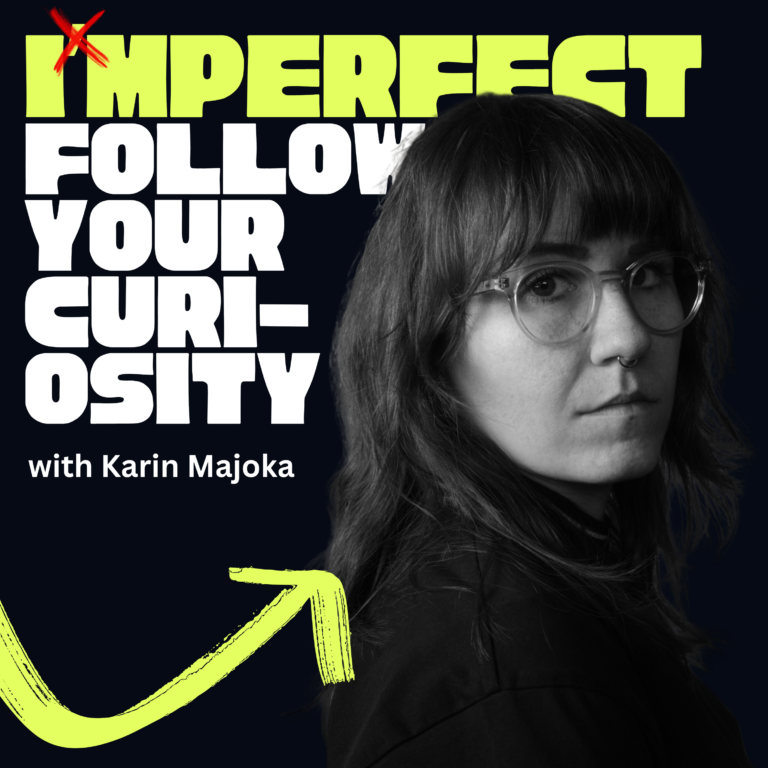
Karin Majoka is a photographer, YouTuber, psychologist, and psychotherapist-in-training, who somehow makes it all work without burning out. In this conversation, we explore how she balances multiple creative passions with a full-time career, why internal motivation matters more than external validation, and how treating photography as “just one language” opens up creative freedom.
We also talk about the struggle of overthinking, the temptation to “pick one thing,” and why experimentation might be more valuable than finding your style. Karin shares lessons from abstract painting, why putting work out into the world is both terrifying and necessary, and how her psychology background shapes her creative practice.
Resources
- Karin’s YouTube Channel: Karin Majoka
- Karin’s Instagram: @karinmajoka
- Book recommendations:
- You Are What You Do by Daniel Arnold
- Twilight by Gregory Crewdson
- Art Work: On the Creative Life by Sally Mann
Full transcript
Mike: Right before we started recording, I was talking about how it’s kind of challenging to balance working full time and doing creative stuff and YouTube and photography. You do photography, you do YouTube, you’re also a psychologist and a psychotherapist in training. How do you balance all of this stuff?
Karin: Now you’re saying all those things, I realize, yeah, it is much and probably also a bit too much because I’m definitely no expert in juggling all this. I do think I just have several interests and I try to squeeze as much time of my life into what I am passionate about, what I like. And it just happens to be multiple things.
But in practice it is pretty difficult. I mean, I have to pay my bills, so my job is something I cannot really cut down all that much. But I just try to keep a goal in mind and I try to keep my passion in mind and where I want to be with the things I enjoy doing. And I think this just helps me to keep going. But at the same time, I feel like I always compromise. And I think you have to be ready to compromise when you try to do several things.
Because, for example, with YouTube and photography, I do definitely compromise more on the photography side because YouTube just takes so much time with editing and planning out videos, recording videos, shooting them and all that, which is something I totally appreciate. But in that time, I could probably follow more photography projects without having all the side tasks of making videos. But I’m just passionate enough to invest that time into it and sacrifice a little bit more time into photography just to have a good mix of both.
But my biggest advice would be don’t do it like me, because also in many ways it’s not healthy. And I think if I keep going for much longer, it could maybe result in a bit of a burnout. So it’s also just important to take care of yourself and take breaks if you realize it’s just too much. So, not speaking from an expert perspective, but speaking from a perspective of somebody who’s also trying to navigate all that and juggle multiple things.
Mike: Is there a temptation to be like, oh, maybe I should just not do the YouTube stuff and just fully enjoy photography and forget about it? Or what keeps you going?
Karin: Definitely. There’s been phases where probably there was a good rotation of all the things I’m interested in, where every single time it was like a different thing. I was like, okay, toss this. I’m not going to continue with this. So of course there has been the temptation to just let YouTube go, but especially every time it gets hard, every time I put out a video and I realize it’s not performing as well as I was hoping to, or the feedback wasn’t as positive as I was hoping to.
But I also just realized I cannot stop because these things are external, like the feedback and the clicks are external, but this is not what motivates me. This is not what drives me. But the sheer act and the sheer process of working on a project and having it finished at some point is giving me enough validation to keep going.
So it’s more of a motivation that sometimes sinks in, but it just kind of bumps up every time I come up with a new project. So yeah, I think for me it’s really helpful to try to separate the external validation from my internal motivation. In that sense, it’s sometimes hard to remind myself of that because this is how humans function. We want to have some drive from the outside sometimes, but I don’t think that this is sustainable in the long term. How is it for you though? How do you juggle multiple things? Because you’ve been saying you’re doing the podcast, you also have a job. Do you have a strategy, for example, to prioritize what to deal with first?
Mike: Absolutely not. No, I fully understand what you’re saying and I’ve not been doing this for very long because I think focusing on your internal validation is definitely the way to go. But I feel like even as a new creator, there’s so much external validation thrown at you immediately.
Like you’ve set up a YouTube account and they’re immediately showing you stats about how you’re performing within the first hours. And oh, you should also upload shorts, and here’s how you get monetized. Here’s the path towards that. And oh, you can also advertise to get boosts and, oh, you should also hype yourself and make sure you do this and that. And oh, you can also AB test your thumbnails. I’m also writing on Substack, and it’s also got its own dashboard and stats and all that kind of stuff. So I think it’s so easy to start looking at that stuff regularly because it is literally thrown in front of you every time you log into any of these platforms.
What you said there that sounds really interesting to me, is you said it sounds like your internal validation comes from the feeling of having wrapped up a project and got that project out in the world. Is that right?
Karin: Yeah, I think a big part of that is how it goes for me, because I know that some people, for example, have a plan laid out when they’re going to do a creative project, be it a photography shoot, be it a YouTube video. They pretty much have the starting point to the end point already everything planned out. And I know that there’s some people who just go with the flow and they don’t plan out anything at all. And for me, it’s kind of a middle thing. I have a rough sketch. I know kind of what I want to, for example, talk about or what the topic of a video is going to be or the key points.
But I try to leave enough room for the project to also evolve on its own, to not have everything laid out because then it’s a bit too boring for my taste and I like this little bit of uncertainty. So for me, for example, editing a YouTube video almost feels a bit like solving a puzzle because I know how the picture is going to look like in the end, but I don’t really know where each puzzle piece is going to be in the end. And I think just this problem solving task in and of itself is giving me so much joy because every project is different.
And yeah, this mix of having a plan, but also having some room for uncertainty, I think it’s just this magic mixture that kind of gets me going. So for me, the point of, okay, I’ve solved this, this is done now, now I know where everything is going. Now I know what the bigger picture is. I think this is pretty much the key motivation that kept, that keeps me going. And this is also why I do have a few videos where I kind of write a script from start to finish and those just feel like a chore.
Those don’t feel like I’m enjoying it too much. And also the ones where I feel like this is pure chaos, I don’t really know which direction to go to, these feel overwhelming. So I just try to stick to this pattern of having a rough lane, but giving me some room to actually play around with.
Mike: It gives you some room to follow your curiosity, I guess, and your creativity to, it’s like following your inner compass.
Karin: Exactly. Yeah.
Mike: I wonder then if that’s also, does your joy for creating YouTube videos, is it a different kind of joy to the photography or do you do the same thing with your photography? Like you have a rough idea of the stuff you want to shoot and then you go out and you shoot and you find a direction or how, yeah. How do those two things interact?
Karin: It’s a very good question. I haven’t thought about that before. I think in general, I do think you can probably translate that formula to all areas I’m interested in creatively. I think for photography, it still feels like I’m a little bit more lost because with photography there’s so many genres you can shoot in. Photography is also a big playground where you can, for example, shoot things very specifically. You can plan shoots where you have control over every element.
Like for example, a studio shoot or something like that. And then you have this type of photography, like street photography, where you go out on the street and you don’t really know what happens. It’s just going to happen or it’s not going to happen. And I’m still navigating which type of photography I’m most interested in.
So for me, I feel like I’m still more in the searching phase of what kind of projects I want to deepen in the long term. While with YouTube, I think I already found this formula of, for example, actually talking about exactly that, talking about finding my voice, finding my style and all that without needing to have a fixed plan yet.
So I think with photography, I feel more that I’m still on the search. While with YouTube, I think I kind of found the overall pattern that works for me also because YouTube has so many layers. This is what I enjoy about the format of making a video because you don’t only have one photo, you don’t only have the end result, but you learn so much more about the process.
I’m interested in finding the right music. I’m interested in finding the right pacing, finding the right colors that kind of fit the vibe that I’m going for with this video. Trying to come up with scenes and shots from different perspectives that kind of match it. So I think, yeah, just having multiple layers is something that interests me so much, which is why I think YouTube is interesting for me.
While with photography, I haven’t really figured out yet exactly what the one thing is that I’m most interested in, if that kind of makes sense. And I don’t even know if I want to be there yet because I like this journey of exploring quite a lot too.
Mike: So you are a “the journey is a destination” kind of person.
Karin: I try to remind myself of that a lot because when I look at other photographers and I see they have this perfect portfolio where all they found their style, you can see an image just from one glance, you know, this is this photographer’s style. Of course I sometimes envy this and I’m like, oh, I want to be there yet.
But at the same time I’m thinking I’m in the beginning of my thirties. I still have so many years ahead. It kind of would be boring if I cracked that code already and if I know what my photography is because there’s so much more to discover. So I just want to take my time to play around with it before I kind of settle more into specific things.
And I also think you cannot force it if you try to force it. And if you say, this shall be my style, this is the project I’m going to follow on, I don’t think this works. I think it has to grow organically. So this is actually my soothing mechanism to tell me it’s about the process, not about the end result.
But of course sometimes I’m struggling with that too, and I’m in doubt too, so it’s not like I have it all figured out. It’s more like I’m trying to accept the path where I’m at right now, if that makes sense.
Mike: To me, that also sounds motivating, especially with photography. And I mean, the thing that I read a lot about YouTube is, oh, to be successful on YouTube, you need to basically find a format, figure out what works, and then just repeat that format forever.
Which to me also sounds a little bit depressing. And with things that are inherently creative, like photography, I don’t know if it, I don’t know if it would be so satisfying to be like, oh, I just do that kind of picture forever for the rest of my life. To me, that would kill a lot of the joy in, there’s exploration. Like play and fun. Those things have to come into any creative practice. I feel like probably you can apply that to YouTube as well. So that makes sense. I think.
Karin: Yeah. And I mean, just think about your favorite bands, your favorite musicians of course you want to have, if they come out with a new album, you want to have some sort of sense that it’s this band or this musician.
But it would be boring if you could predict 100% what the new album’s going to sound like. But you kind of expect some novelty and you expect some growth because this is kind of what keeps it interesting without losing what you liked in the band in the first place. And I think with YouTube it’s similar.
I, for example, I follow a lot of creators because I also draw a lot of inspiration from people doing their thing and sharing it on the internet. But I realized that some creators who are actually following this same pattern, same video, all videos are just exactly 12 minutes and you have this pyramid structure and you kind of can expect what’s going to happen if you watch the video, this might work and they might have incredible numbers on the algorithm, but I, for example, find it too predictable at times.
And this is usually the channels that I start following less while I enjoy the channels that kind of come up with something unexpected every now and then, because this is what keeps it interesting for me as a viewer, but also for me as a creator. So yeah, I think you summed it up quite nicely actually.
Mike: Jumping back a little bit, the topic we started with was also how to balance YouTube and photography and also psychology work and psychotherapist work in terms of balance. I’m also curious about identity. Like, how do you decide what focus to give at a particular point in your life?
I mean, maybe those two things are complementary. You will tell me, but I also wonder if they’re also competing, right? Like, isn’t ever the temptation to say, oh, I could go 100% all in on YouTube and photography. I mean, you said, oh, I’m, you know, in my thirties, I only have so much time. So like, I don’t know, is there any temptation to say, oh, actually maybe why not go all in on this passion?
Or why don’t I drop the YouTube, drop doing as much photography and go all in on psychotherapy? Is this an internal battle that you have or is this actually, you have an identity, which is both of those things and that feels good?
Karin: That’s a very, very good question. I think I have to think about this for a moment.
Well, there definitely is a battle just because time restrictions are happening. And of course we, or at least I, as a human, I want to solve things and some things are not solvable. And if I’m torn between, shall I invest more time into this? Shall I invest more time into this? An easy solution would be to choose one, right?
So of course there’s a temptation to just say, toss the other thing, and then I’m just going to focus on this because this would solve a lot of problems. But I don’t know. I’m not interested in the easy solutions and I do think that yes, sometimes just because of context variables, because I don’t know this job demands or requires a bit more of my time.
There is an imbalance and sometimes there’s a focus on, for example, more of my photography work. And especially in the last three or four years, I had to have a big focus on my psychology psychotherapy work just because I’m still in training and there were some exams, some things I had to do.
But I do actually think that when it comes to identity, both aspects can benefit from each other. So I do think that I am a better psychologist because I do have some things outside of psychology. While I also think I maybe am becoming a better photographer because I do things in other areas outside of photography.
I don’t know what this makes to my identity. I still struggle to, for example, call myself an artist, even though I would love to feel comfortable with this label, just because I’ve never had a professional training in art. So it’s easier for me to call myself a psychologist, psychotherapist because this is what I had my degree in.
But at the same time, it all still doesn’t feel quite 100% fitting because for all of these labels, it feels like there’s so much more room to discover things outside of it. And for example, if I wasn’t into photography, if I didn’t have this whole side path, I think there would be some patients that I talk to that I maybe couldn’t 100% understand, especially if they’re, for example, dealing with their own identity problems, their own struggles of balancing things, their own creative block or anything like that.
So I feel like if I wouldn’t have this whole other identity, probably I wouldn’t be as capable of actually understanding what they’re going through. And on the other hand, I think if I didn’t have my form of psychology training, probably there would be totally different things I would be interested in photographically.
And I actually look for things that are kind of connected to psychology in one way or another because in the end, psychology is about understanding people, be it other people, be it me. So pretty much my photography is my language of trying to understand what’s around me and trying to understand me. So if I didn’t have the theoretical background, I don’t think I would’ve drawn this connection.
So I don’t know if this answers your question at all, because I didn’t answer the question what my identity is, but I do think it’s kind of both, and I would actually prefer it to be that way, because I think both can benefit from each other quite well.
Mike: No, I mean, I think it’s a tricky question to answer and to be honest, the more I talk about this topic, the more I feel like, okay, well maybe having fixed labels or a fixed identity is anyway overrated.
Like why do you need to put specific labels on it anyway? Right? Like you do whatever you find interesting in the moment and you do it because those are the things which interest you. And of course they will play on each other, and maybe that’s a nice thing because that’s a nice thing in life that you can try many things.
But definitely earlier in my life and in my career, I felt like I need to go all in on one thing. Like, okay, I’m working in tech, then I’m going to be the best at that thing I can possibly be, and I’m going to drop all my other hobbies and whatever. I’m going to be really good at that thing. And then when I got into photography, there was a feeling of maybe this is the thing.
Maybe I should really go in on this thing and drop my other passions. But in reality I don’t know if I would want to live like that. I think it’s actually quite freeing and joyful to realize that you can appreciate and be passionate about many different things.
Karin: Yeah. And I think this is how novelty also happens. If you stick to just one thing, it’s very hard to actually experience something outside of it. And a lot of photographers, I think drew a lot of their inspiration from other media, like paintings, like movies, like poetry or music. And I think it’s very important to have this spark of something else that can be translated in the medium that you feel more comfortable in.
But just sticking to one thing I think is in a way limiting, it reminds me a bit of AI where you cannot come up with anything new. With AI it’s only using the data that is kind of fed into it. So for me, for example, having a different passion than just photography, it’s like giving a new input that I couldn’t otherwise have just from sticking to photography, for example.
But I understand that struggle very well and I understand that giving labels is something that naturally happens. I mean, labels have a good reason because they simplify the world. If we can categorize something in a label, it makes it easier to understand. And I think this is why it happens so quickly that we try to classify things as this or that label.
But it’s easier to process things if we give them a label, but it also kind of takes down the complexity of how things actually are in real life. Yeah. Labels are good, but just to a certain extent, I think.
Mike: You mentioned that using the label of artist feels somehow like a struggle for you. What makes that hard?
Karin: I think exactly what we talked about before, that I feel like you need something to deserve the label of being an artist. Having some sort of portfolio or some sort of work that left an impact or where you feel like this is truly you in that way. And I think I’m not at that stage now. I would like to call myself an artist also because this umbrella term feels more fitting than calling myself a photographer because there’s other things I’m interested in besides photography, but I don’t know, I think to call myself an artist. This is probably also just prejudice. I don’t even know if this is true, but I feel like I need to have something in my hands to prove that I’m an artist. I would either need an exhibition, a gallery or a book or something that I can prove that I deserve this label.
And I think I’m not there yet. So for me it’s more like being on the search and hopefully being at the point of calling myself an artist one day. Yeah. But I don’t know if it would’ve been differently if I had a professional background in arts and a degree. I don’t know if this is enough to qualify you to be an artist.
Maybe a real artist can answer that for me. I have no idea.
Mike: Yeah, I mean it is interesting that you say “a real artist,” right? I mean, for me it feels like if they would have a qualification or an exhibition or something, I don’t know if that really makes it more valid, right?
Karin: Probably not. But it’s just a feeling probably it’s not really rational. But—
Mike: You’ve also mentioned you’re into other stuff than just photography. And a quote that I love from you is that photography is just one language, right?
Karin: Yeah.
Mike: What exactly do you mean with that?
Karin: So for me, it all started with painting. Back when I was younger, I was very interested in painting, like classical oil painting, mostly and also drawing, just running around with a sketchbook and drawing everything I could see. So for me, photography was more of a byproduct of being interested in painting. And in the past I’ve experimented a lot with different media. I’ve done some installations, I’ve done some sculptures, for example, and I’ve also played theater.
I’ve been a big fan of improvisational theater because it’s exactly what we talked about earlier. It’s like you get some cues, you get some hints, and then the rest kind of just develops on its own. So for me, this key interest in trying to understand the world around me doesn’t necessarily have to be in the form of photography, but if the medium I can access is writing something or painting something, or being in a play in improvisational theater, it all kind of brings me closer to the same goal.
So I think in a way it’s more of a coincidence that I ended up with photography being the bigger chunk of my passion and getting the majority of my time when it comes to it. But I think it’s not, I’m not married to photography if that makes sense, but I’m just trying to find a medium that works best for me.
And right now the visual medium of photography is what works best for me. But if I ever decide that maybe there’s another medium that’s fitting my self-expression more than I wouldn’t stop myself to actually explore this path more. And it’s been like that in the past. So I also try to not give up the other passions.
But yeah, this is where we run into time, resources and just reality of things where it gets more difficult to juggle even more things. But I try to not kill all those other interests, but just try to give them a little bit of room every now and then if I feel like it. Lately it’s been more writing, actually, I’ve been writing a lot of my own thoughts just because the medium of having written words, having something on paper that is not visual but actually more less tangible, more in your head has been giving me something and this is why I’m not set on a medium.
But I think it’s just interesting to navigate how different mediums actually affect your thinking and your expression.
Mike: Yeah. What do you think has brought you into writing?
Karin: I think for me, writing is something more biographical in a way where in photography I’ve tried to do that too, where I tried to, for example, learn more about my upbringing, more about my relationship to my parents, more about what’s different motives have been that motivated me in life or things I’ve been struggling with.
Also when it comes to family history. And I think that some part of that maybe isn’t, at least not now possible for me to express in photography. And I realized that some things I needed to kind of structure in words and that kind of resonated more with me. If I put down in what drew me a little bit more to writing in the last months, but I’m not sure if this will stick.
I’m not sure if this is something that will last, but just right now it feels like the medium that helps me to kind of collect my thoughts a bit more. And who knows, maybe this writing will be the base for something that I will express in photography later. But I think this is exactly what I like that because, you know, the media are languages, they’re also translatable, and with every language it is the same that some phrases, some sayings, some aspects cannot be 100% translated, but it’s something that’s unique to that language that you can express it in that language.
So I’m just trying to see if, for example, writing is a good base, but if I really want to get that one thing out that’s maybe not possible in writing, then I can switch to something else. But the core idea of having them translatable with that extra thing, that every language is unique. I think it’s speaking to me a lot.
Mike: That seems like the wonderful thing about treating them like languages is that you can be a bit more fluid with things and I guess not so fixed on one medium, right? Like if you feel writing is going to better serve you, then why not? Also without worrying about the label of being a writer or something, like why not play around with it? Why not experiment with it. I guess it’s in the end an experimental mindset, right?
Karin: Yeah. I think experimentation is a key word here. I think that’s, this is kind of the beauty because this is where new things happen. If you experiment things that maybe you weren’t predictable happen and this is what you can work with.
Mike: I was going to ask if there’s any other mediums on your radar right now that you’re experimenting with?
Karin: Actually, yeah. Lately it’s been writing a bit more just personal writing. This for example, it’s nothing I would ever share on my social media or on YouTube. This is just something for me. And last year I was very interested in abstract painting because before I was more interested in more figurative painting in that sense that, for example, like the surrealist visual language is something that I really like to have, like more surreal looking, bizarre scenes that I was painting.
And last year I visited an art course about abstract painting because this is something I had absolutely no connection points to. In fact, I was a bit more prejudiced. And I thought, okay, people who cannot really paint, they do abstract paintings. And abstract paintings usually don’t have any meaning.
They’re just whatever provokes people. Right? And that kind of mindset was 100% switched due to this course. I really learned what abstract painting means. And that abstract painting in its core is just experimentation and seeing what works for you. And one of the most, I would say, yeah, most inspirational quotes that stuck to me to this day is when the painting teacher, because I was painting and I was like, oh, what can I do?
Do I, shall I add some more color there or shall I add some more color there? And he told me, that’s not for you to decide. You cannot decide how it would be if you add something here or there, but you have to do it. And then decide how you like it. So there’s no way of thinking ahead or overthinking things, but you can only work with the thing that’s actually there.
So if you think there should be a yellow mark on the left corner, you cannot imagine it. You have to do it and then reevaluate. And I think this kind of helped me to stay more in the moment and in the present and work with what I have instead of overthinking different paths. Because in the end it’s more about going with one thing and then deciding if that’s what works or if you shall kind of work on it some more.
And yeah, abstract painting is very underestimated and something that I really would like to try to do more in the future.
Mike: Honestly, this feels like the best way to do any kind of creative work that you care about is that you actually have to do it and then see what happens, and then adjust your expectations or adjust based on what you see and based on the result, right?
Like at least that’s my experience so far doing creative work and putting it out there. Yeah, you just have to do it and see what happens. But if you’re just thinking about what’s happening or trying to plan everything ahead of time, you’re probably going to have a bad time.
Karin: Exactly. And maybe this is a bit of a simplification, but I recently moved, I moved to a different apartment, and ahead of time I was trying to do everything, every logical, rational thing that you could do, right? I measured out my apartment, I was imagining where can I put which furniture, how is it going to look like and all that.
In the end, all that didn’t matter because in the end, you cannot know if you like the layout, if you like where your sofa is standing unless you experience it. So for me, I try to learn more as I get older, that doing things is sometimes way more important than imagining or thinking about things.
Because in the end, in your head, you could have the perfect layout. You know which side of your room is which length, and you know that in theory the sofa should look best here, but then you put it there and just doesn’t feel right. So you really have to experience it in order to know how it feels like.
And I think with art it’s the same. You can make up so many things in your head. You can come up with so many ideas. It doesn’t really matter. Because just when you do something, this is when an idea comes to life and this is where you can actually resonate with it and you can see if this feels right or not.
And then you can change something. But I think trying to be just in your head is not helping in that sense. But you have to experience things in order to feel how this experience feels like.
Mike: This is a little bit of a leap, and maybe it will sound dramatic, but I read this article once and it said something about, if you want to live a life that’s meaningful and interesting, you basically have to kill your dreams.
Because dreams are always going to be perfect and always going to be like, oh, I could do this, I could do that. It’s going to be, if only I would do it like this, and maybe it would be perfect. And the reality of doing anything, right? A YouTube channel, a podcast, a film, photography, whatever it is, once you start doing that thing, you’re going to run into all kinds of friction points, things which aren’t in your dream because you’re really doing the thing.
So you’re doing all the bits and pieces you didn’t think about in your dream, which is kind of something to celebrate because it means you’re actually doing it. It’s like putting the yellow on the canvas. You know, in your mind, maybe you had a dream version of how that looks. You put the yellow on the canvas, you’re like, oh, I didn’t think about how that would interact with the blue.
Okay. What am I going to do now? So it’s like actually a good way to live your life is to intentionally go out and kill your dreams because you’re actually then finding out the real life version of doing the thing.
Karin: It is so beautiful and such a coincidence because I think I read a similar quote recently, maybe like one or two weeks ago. So I’m just like blown that you come up with this right now where somebody said, if you die and leave the world, it would be better to go with experiences than dreams. So if you never did what you dream about, you will never know how it is. But it’s better to have experiences even though they might not be as dreamy and as beautiful and as perfect as in your dreams, but at least you experienced it.
So I think that kind of ties together quite beautifully.
Mike: I would definitely describe myself as a recovering overthinker. Is that something you also identify with? Would you say that you are prone to overthinking?
Karin: 100%. Yeah, I still do, still haven’t found the cheat code on how to actually not do that.
But I think reminding myself that doing things over and over again is actually kind of the best medicine to cure overthinking doesn’t mean that it cannot happen again. And I think I will forever be somebody who’s living in their head quite a lot and trying to come up with scenarios, trying to be prepared mentally for things.
But I’m trying to remind myself more than that. Thinking is good to a certain extent, but at some point you can think as much as you want and it won’t bring you any further.
Mike: How do you combat it? Is it just noticing that pattern and then doing stuff?
Karin: Writing right now. So right now it’s exactly that to write down thoughts I had that actually helped me to try to not overthink, talk to people that I think do that maybe in a way that I would also aspire to be where I see there’s certain people in my life who do things, who maybe even do things that I’m still dreaming about. Talking to them and seeing how they do it and try to learn from other people’s experiences, but also my own, the times where I tried to overthink, did they really help me try to reflect on those situations and try to see what, what actually my barriers are, what is my fear of actually doing it and trying to understand that a bit better.
Yeah. But as I said, I haven’t found the cheat code yet. I’m still, I think the term you used is being a recovered overthinker or recovering overthinker. I think this works quite well for me because I’m not there yet, but I’m trying.
Mike: Same, yeah, same. I’m also trying. The question I asked myself and I wonder what the answer would be for you is, where does that overthinking come from? Like is it just fear of various uncontrollable things or, yeah. What is causing that habit of overthinking?
Karin: Hmm. I mean, I should know from my psychological background because this is something I deal with in my daily job quite a lot, but it’s always different to apply it to yourself and not to somebody else. It’s so much easier to answer those questions for somebody else and give advice. But for me personally, I think that the idea of needing to be prepared and needing to have control is something that definitely triggers my overthinking, the illusion, and I intentionally call it illusion of having something to prevent potential outcomes happening, is something that triggers my overthinking.
Because I think if I just thought about it enough, if I thought about all the scenarios, this would help in the long term. But I realized more and more that this is just not right. This is not valid because as much as I think there might always be a new scenario that I didn’t come up with in my head and I spend so much time thinking about it that I don’t actually get to do it.
So I could use this time more efficiently to actually do it and try out and then reevaluate. But the core of my overthinking, I would say, I would assume is from lack of control. Fear. I think fear is a big motivator to overthink, and just trying to have control back, I would say. But I would also be interested, what is your answer? Do you have, have you found an answer where your overthinking is coming from?
Mike: As you said, maybe easier to help friends or other people answer rather than yourself? Right. That introspection is hard. I think a lot of it is fear. It’s something I wrote about recently actually. Because I was asking myself this question, especially at New Year’s when you know, at least for me, there’s lots of ideas about what I’m going to do this year. What do I want to plan? It’s tempting to write all these plans and control. I feel like you’re controlling everything and that you have the perfect plan.
I think it is coming back to fear, usually fear of failing and then you can ask yourself, you know, well what even is failure in this context? Failure is actually probably not even trying. So that’s something that helps me. But yeah, I think it’s usually fear of failing or something going horribly wrong or it’s not turning out the way I want it to turn out. One thing I actually also like to do is write, and I found a really helpful prompt for me is to ask myself what could go right if I do this rather than what could go wrong if I do this?
And I think the other thing is just training that muscle of doing stuff I found is the best way to help myself not get stuck in an overthinking spiral. Like just the act of going and doing stuff and then getting used to the fact that things will go wrong and yet you’re not going to control everything feels to me so far like the best antidote to just overthinking all the time.
The overthinking is still there, but at least I’m also trying stuff and putting stuff out there and seeing what happens. But yeah, I don’t know why exactly. Maybe some of us are just wired that way to want more control or more predictability or more security. Like, maybe it comes back to personal values or I have no idea.
But I do feel like doing things seems to be the most effective way of combating it.
Karin: Probably also prior experiences that were experiences where you had lack of control. I think this is something that kind of leads to overcompensation in a way. And what you said I think is very beautiful because you said that just doing things is helping to get over it because this also opens up new doors that maybe you’re overthinking couldn’t even think about.
Like, I think when with overthinking, we tend to think about the risks and the things that could go wrong, but there’s not so much room for things that could go right, or unexpected things that actually turn out better. And this is why, as you said, doing things actually help to experience that there’s also other options that we maybe haven’t thought about that could be the outcome.
Mike: That’s really cool. It reminds me of this metaphor, like asking these big questions as well about things like, oh, why can’t I just do this thing? Or why couldn’t I just do the project that way? To me is like shouting at a wall, like you’re just going to get your own thoughts reflected back at you.
But if you imagine a big wall and there’s a bunch of doors in the wall, like if you start opening doors and seeing what’s on the other side and going through and having a look, as you said, there’s going to be things that you don’t even anticipate. Like you can’t see what’s on the other side of that wall unless you actually start taking those actions and opening those doors, like just shouting at the wall and being like, why?
Or oh, what should I do? Or how am I going to get over this wall? Like just thinking about it is never going to get you to the other side of the wall. But trying a bunch of doors and seeing what happens is probably the only way, and it’s something I also try to keep in mind.
Karin: Exactly. I think if anything, it just turns into an echo chamber that if you shout more, the more it is surrounded by you. And I think things like a self-fulfilling prophecy is happening because if this is everything you’re hearing, then of course things can only go wrong and you can only quote unquote fail because this is what you’re telling yourself. So I think opening those doors is very important to just let those rooms not turn into an echo chamber where there’s nothing else than just negativity.
Mike: This is going to be a really smooth segue, but I wonder how was this for you when you started on YouTube? Because I feel like creating a YouTube channel and putting yourself on the internet, is it kind of a scary thing? At least for me it was. I had a lot of overthinking patterns about doing that. Was that there for you or what was that initial nudge to be like, yeah, I’m going to start making videos and pulling myself out?
Karin: Interestingly, it wasn’t there as much in the beginning because I knew that nobody would be watching because I knew if I put out the first videos, there wouldn’t be anybody watching. So I could just do what I want to do without worrying too much. I think for me it came a little bit later when the engagement in both ways, positive and negative, happened to occur more.
But the other side of your question was also what motivated me to start the channel in the first place. And I think this is exactly what we talked about before. It was just a chain of coincidences. I was more invested into photography. At the time I liked shooting, especially street photography was a big passion of mine at the time.
It was around 2019. Then 2020 came rolling around and I think we all remember this fever dream of a couple of years with lockdown and everything. And suddenly what I just found for myself, street photography, documentary photography, wasn’t accessible to me anymore, or at least not as much. And I didn’t really know what to do.
I was kind of giving up thinking, okay, this will just be on pause for a couple of years then, but I just realized that I still have this urge to create. I still have this urge to do something. So I knew that I kind of had to switch lanes in that sense to find something else that I’m interested in.
And then I met one of my now friends, who has a YouTube channel, Samuel Street Life. We met in Hamburg, just went on a photo walk and he actually told me that he has been struggling to find female photographers for his channel to interview, to showcase, because for whatever reason in this photography niche there’s fewer, at least women in social media.
I think there’s a lot of very talented female photographers, but maybe not as many who kind of go to the front and show their face and are public on social media. And that kind of triggered the thought of, hey, maybe that’s something I could do. Not that I feel terribly qualified for it, but just something to maybe show more presence because feminist values and equality are values I stand behind a lot and I think this just kind of gave the little trigger of saying, hey, maybe if there’s not enough visibility in the photography scene of female creators, I can complain about it, but I could also just try to serve that purpose for a little bit.
If anybody will listen or not, doesn’t really matter, but at least I’m there and I’m trying, and this is what kind of gave me the idea to record my first video. And then I realized how much fun it is and how much exactly those different medias that are combined in video happen at the same time, because there’s writing involved, I usually write down at least a rough sketch of the video.
There’s shooting involved, there’s the whole aspect of making a video look pleasing in a way. There’s coloring involved, there’s music involved, there’s pacing involved, and I kind of realized that this complexity of different media coming together is something that interests me quite a lot.
So I just kind of never stopped making videos, but the first one was more, I’m just going to try it, see what happens, and then I just never stopped doing it.
Mike: So it was like low expectations plus, I guess intrinsically valuing what you were doing to increase representation of female photographers in the community?
Karin: I think so. I think, yeah, that sums it up. I pretty much had zero expectations and in fact, I was scared that somebody could find me because I work as a psychologist psychotherapist, so of course I also had to think about ways to maybe not be, to not find my YouTube channel first thing if you Google your therapist, right?
So I kind of had to, just from a spontaneous idea, came up with an artist name. So Karin Majoka is in fact not my real name, but an artist name. Just to keep those two identities, so to speak, separate, just because I didn’t want my patients to stalk me and I also didn’t want my followers to know where I work and know too much personal details about me.
But that kind of helped to not actually see it as an undercover mission. The least people see me the better.
Mike: Yeah, that is kind of cool. But at the same time, it must be also, the more popular and successful you get on YouTube is that fear not coming back. If you’re like, oh, maybe I will have a patient who’s going to be walking into the room and be like, oh, Karin, I know you from YouTube. I’m also into photography. And you’re like, oh, oh no.
Karin: I mean, knocking on wood. So far so good. So far that didn’t happen to me. I don’t know if this will ever happen, but if so, I think there’s still ways to navigate around it and see if then, if it’s really a good match to work together in that context.
Or maybe if there’s other people who would be a better match or if there’s ways to make it work even though I will still continue to publish videos, because I mean, therapists also have a private life. You could also meet your therapist in the sauna in your gym and that would also be an awkward situation.
So I think people who have stumbled upon my videos before, it’s an awkward situation in that sense that is solvable and that you can find ways around it. But yeah, I mean. The chance is there, but luckily I didn’t have to deal with it so far. And I think for that, especially film photography, which I focus most on my channel is, and I live in a more smaller city right now.
I’m thinking about moving at some point. But I think probably those two bubbles are not overlapping too much for now, which kind of makes it easier to be lucky and didn’t have experiences like that so far.
Mike: Something you mentioned as well, just going back one step, you mentioned that in the beginning there’s an underrepresentation of female photographers in the community. Do you feel like that’s still the case? I also wonder why, if so.
Karin: Yeah, I wonder that too. I do think there’s, I think they’re catching up. There’s a lot of wonderful female photographers that I also appreciate and watch regularly. Taylor Patton, Madison Beach, Lucy Lumen. I think there’s a lot of, oh, and Laura Ette, I think, I hope I say her name correctly.
I’m sorry. Now I know how you feel now I’m on the other side of trying to not portray people’s names, but there’s a lot of creators that I think get more visibility and the visibility they deserve.
I also ask myself why that is the case. I think because especially film photography is a niche where a lot of things come together. I mean, you have to have at least some technical interest because without that film photography doesn’t really work. You need to know your tool probably a little bit more than just shooting auto on a digital camera.
And I think the sheer fact of being exposed in that sense of being in front of the camera, talking to the camera is something that probably draws a lot of people away from it. I would also say that I’m more of an introvert and my channel is not loud and buzzy and “hey, what’s up guys?” type of style. But I think that’s what a lot of people kind of connect to it.
They think you have to be an extrovert, you have to be a loud, cheerful character in order to entertain people. And I think that is slowly breaking down and that’s not the stereotype that lasts. So I think this kind of opened the gateway for more also female creators to show up or do you have another theory? I would be interested in your thoughts.
Mike: Honestly, no. By the way, shout out to also One Month, Two Cameras, Ali, from One Month, Two Cameras. Yes. That’s also an amazing channel. Yeah, that kind of makes sense. And I also have felt like there’s a shift away from buzzy, over the top content, which I’m very happy about.
I recently heard of it described as grandma or grandpa content, meaning that it’s very chill and unedited and you’re just talking to the camera. And I think it’s a good shift because maybe it opens up the space a bit more. But I also wonder if that’s because people crave authenticity more.
Especially when there’s stuff like AI in play. I wonder if it’s because people now crave more authenticity, that we actually get more varied content and more down to earth chill content. Personally, I’m very happy about. I also think of the channels that I like also like yours. I think I like that kind of content the most.
Because it feels very real. It doesn’t feel like someone putting on a performance or trying to be like, hey, yeah, what’s up? Let’s go. Like Mr. Beast style. I don’t know. So yeah, I don’t know. That’s also the content that I like the most. I would hope that that actually has a bit of an uprising. It feels like it’s a good time for it as well.
Karin: Yeah, I agree. And I think, I mean, what I like is when people show themselves vulnerable, I want to relate to people and their experience. I don’t want to have the photographer who’s just showing up, taking the perfect image and making it look easy, because I think if this works for people and if this is reality, then I’m very happy for them.
But I think in most cases this is not reality. So I can relate to people rather than just throwing the perfect end product. They kind of take me on the journey of experiencing their thing, experiencing maybe the struggles and the things that make it harder. So this is kind of the content that I like to watch because this makes it relatable. And this is, I think also why I like to make videos like that myself, because I don’t see myself as the expert who’s teaching people the wisdoms of life, but I’m just trying to be the person who’s inviting you to join me on my journey where I make mistakes, where I fail, where I sometimes have maybe successful things that happen.
And I just want people to participate in that rather than showing a perfect, polished version of what things could be.
Mike: Yeah. And I think I was going to ask you this question, I think maybe you’ve already answered it, but I was wondering, it sounds like for you, I mean, so one thing we’ve talked about, you mentioned that photography is one language.
And so it sounds like also videos are kind of another language, which come with all of these its own challenges in terms of scripting, music, pacing, all this kind of stuff. So it feels like for you, there’s already a purpose behind posting videos and doing photography as well. Would your photography feel as meaningful if you didn’t put it out there into the world?
Like if you just did photography for yourself and you didn’t do YouTube or you didn’t do Instagram, would it carry the same meaning or would it change?
Karin: Yeah. I thought about this in the past quite a lot too, because it has something to do with the fact does visibility, does some sort of external feedback change anything about how you see your work, right?
Mike: Yeah.
Karin: And I don’t know because I can only speak from the perspective that I am right now because I am trying to put some of my work out there and this is kind of what I am experiencing. So I can say that this feels motivating in that sense. And I don’t know how it would be otherwise because I don’t have the experience of being Vivian Maier, never developing my rolls, never seeing my work, and never sharing anything online.
And I think as much as I would say that I’m totally not interested in external validation, and I’m still standing behind the fact that a lot of my motivation comes from my internal motives, I cannot free myself fully from it. And I also don’t think that this would be the goal, but other people’s reactions of course, trigger something in me too, be it that they don’t like something where I can maybe see a reaction in myself where I say, but I like it and this is what matters where I still stand behind my work.
Or if I maybe take something from the feedback to heart and think about, okay, maybe they’re right, maybe this is too superficial, so maybe I could see it from this angle. But also if it resonates with people and they give me feedback that my work speaks to them, of course this is leaving a positive feeling with me.
And I think, not to try to be too nitpicky in that sense, but I think it’s important to distinguish what type of feedback you’re looking for. If you’re just trying to get attention and trying to, let’s say have validation or just seek for positive feedback or just have your ego proven.
Then this is just superficial kind of feedback, but if you’re really looking for an authentic reaction in both ways, be it somebody kind of crashing your theory that your work is good or somebody giving you a feedback to a photo that you maybe don’t like, I think there’s a difference if you just crave attention and just want validation that this is good, or if you are actually trying to be open to the feedback that’s coming in.
So yeah, of course putting my work out there is doing something for me and I at this point would want it this way because I think I’m learning and growing from that feedback, even though maybe there’s even feedback that I don’t take to heart or that I stick to my opinion about my work because this also kind of gives me more self-esteem and more self-assurance in my work. So I think we are social creatures. We like to interact with people. So putting out art out there is no different. If I would just do it for myself, this could work for a certain amount of time, but I think I would get stuck in my own thoughts too much.
And I think the experience of putting it out there, seeing how it resonates, I think it’s an important one, but it’s also important to not get lost to just seek for reassurance or validation, but really be open to what your work does with the world when you put it out. And even if it doesn’t do anything, if nobody’s reacting.
Mike: Yeah, I mean, I jumped to this topic out of purely selfish reasons just because I feel like it’s something I’ve also gone through with my photography where I’ve got and, and I think I remember maybe you posted something on Instagram once where you were like, oh, I noticed I haven’t posted a lot of my backlog here for a while.
And then you started posting more regularly. And I’m kind of doing that right now where I was posting stuff regularly and I do feel like it gave me something like it was fun to put work out there and see if anything resonates or if you get any feedback. But at the same time, platforms like Instagram, I feel like aren’t an amazing place to get genuine feedback.
And yeah, I was also curious how you’re dealing with that, right? Because I don’t know, modern social media doesn’t, to me feel like a very, there’s not a lot of reward in just posting stuff on Instagram and getting likes or a comment that’s like, nice, please share this on my page.
Like it just doesn’t feel very—
Karin: Mm-hmm.
Mike: —genuine. But then I’m like, well also not sharing it anywhere also isn’t fun. Like, it’s fun to put your work out in the world and see what happens. It feels more purposeful to me to actually share what you’re creating.
Karin: It feels like kind of a dilemma, right? Where both don’t feel 100% fulfilling. And I agree. For me, Instagram is also not the most fulfilling platform. I get way more interesting thoughts and inspiration from feedback from YouTube just because people tend to have more time to actually engage and really interact with longer form content. I think because Instagram is so instant and so quickly, yeah, disposable in a way. But I try to treat it in that way that for me, posting something is also a reminder that I’m continuing my work. And it’s also for a little bit of a motivation to, for example, edit those photos to actually take a look and see, develop this film to actually know that this gives me a constant to put out less about the thumbs up or fire emoji reaction.
It’s more about being in a way accountable and having motivation to keep going. Also, because I mean I have different platforms where I store my photos, for example, where I can see the work I’m doing, but the Instagram grid is kind of helping me to remember, oh yeah, this is different things I’ve been working on, oh, this is a recent project I did. But yeah, the quality of feedback is definitely not it from Instagram. I agree.
Mike: I think it’s something you mentioned right at the beginning of our conversation, which is just the act of, with YouTube for example, the act of pulling together the video and knowing that you’re going to have something finished that you’re going to put online or share with the world feels quite satisfying in a way.
And having, it’s kind of external motivation and internal motivation because you’re like, okay, well I’m going to wrap this up. It’s going to be one thing. I’m going to bundle it up and I’m going to maybe even give myself a deadline to get the thing done and then I’m going to put it out in the world. And it’s like you’ve released it and you’ve actually done the thing.
As you said, you’ve actually edited the photos and put them somewhere. I noticed that since I’ve stopped sharing, I have so many pictures. I actually was out shooting the last couple of weekends and I’ve not even uploaded, I’ve not even taken the photos off the camera. I have somehow less motivation to go through the process of editing them because I know I’m not going to share them with anyone. I’m also biased. I’ve been reading a really amazing book by the photographer Sally Mann. She has a book called Hold Still.
Karin: Mm-hmm.
Mike: And it’s also amazing. And in that book, she also talks about just the process of putting yourself out there and also facing rejection and facing feedback and also knowing that you’re not always going to get it right.
Like sometimes you’ll put stuff out and you’ll look back at it and you’ll be like, what was I thinking? That’s awful. And sometimes you’ll look in your archives like a year later and you’re like, why did I not put this out there in the world? This is great. Why did I reject this? So I think somehow it does something to your brain to have some kind of release process, that sounds a bit too dry, but you know what I mean?
Hopefully a process to put things out in the world feels like maybe that’s a healthy thing to have as a creator is some excuse to share your work and also connect with people and put it out there.
Karin: Yeah, that book will definitely end up on my reading list. That sounds incredibly interesting.
Mike: Oh, it’s so good. It’s really cool. I think it’s also really cool to see that every successful creative or every creative out there basically struggles with the same things. Like, is my work good enough? Can I call myself an artist? Should I put it out there? What am I doing? What is the point of all this?
Oh my God, this is crazy. It’s reassuring and scary to realize that we all have the same struggles. I guess.
Karin: There’s an example that pops into my mind right now because when I work as a psychologist and psychotherapist, what I like to do is to give my patients some sort of homework, be it an exercise or writing down some sentences.
And what most of my patients actually say is that this sort of external pressure in the sense is helping them because they know this is work they should do anyway. And it’s not about getting my approval. They don’t want to prove me that they’re a good patient, but it’s still some sort of hook that makes you keep going and that makes you look at the hard work.
And I think maybe with social media and with sharing the work, it’s similar. You shouldn’t do it to have your therapist like you, you shouldn’t do it to have the crowd like what you do, but see it more as a motivation or as a hook to get started and do the thing that is very hard to avoid otherwise.
So, yeah, I think that’s maybe an interesting idea to treat social media like that. Like doing homework, not for your therapist, but for you.
Mike: Yeah, that makes sense. I can see a lot of that. And also in this podcast, for example, the parts that motivate me to do it are having genuine connections and conversations with people. Editing and preparing stuff to put it on YouTube or Instagram or whatever, there’s, that’s the homework. There’s friction in that. Because that part isn’t as fun, knowing that if you go through that homework, that you get something really valuable on the other side is the thing that keeps you going, I guess, or at least for me. We’ve been talking about all kinds of topics. I always have the same two questions at the end to wrap up.
One of them is based on everything we’ve been talking about or anything in your mind right now, what is one thing for people who actually get to the end of this episode that you’d like them to take away and think about afterwards?
Karin: Yeah, when you sent me over that question, I was actually thinking about that because I was like, who am I to tell? Who am I to give wisdom out? I don’t even know. Don’t take my word. Maybe that’s the thing. No, but I think what we talked about actually summarizes it quite well that I try to remind myself that experimentation and trying out different things is not only important, but actually sometimes the way to go that I think my key takeaway that I would like to give to creatives in whatever form they’re trying to be creative is to experiment and give yourself time to not pressure it, but actually see the experimentation as a chance, as an opportunity to see new things open up and develop that maybe you haven’t found before.
And I think just keeping a healthy sense of intuition and following what you are curious about, it’s all you need to get going and there doesn’t need to be an end goal to keep going, but just try to find what you enjoy and try to experiment with that and see what evolves. I think this is what I try to remind myself of regularly, so I hope that maybe this also helps somebody out there who’s struggling with the same thing.
Mike: I love that. It’s like follow your curiosity and experiment.
Karin: Yes. Word.
Mike: We also already mentioned a few cool YouTube channels and a few books, but I wonder as well if you have any resources, books, recommendations, anything like this that you would encourage people to check out?
Karin: So this might be a bit of a recency effect because I thought I will just show you the two books that I got recently, which probably couldn’t be further apart from one another. And I think it ties quite well to what we talked about today because there’s two books I recently got. I got the book by Daniel Arnold with the title You Are What You Do. Daniel Arnold is a street photographer who lives in New York City and is shooting observed, funny, interesting scenes that he sees in everyday life.
And it’s a very spontaneous, very raw type of photography where you can do as much thinking and as much planning as you want in the end. It’s just about showing up at the right time, at the right location that you have very little control when you do street photography. And I think Daniel Arnold kind of mastered taking over that control and just rolling with the flow in this very unpredictable type of photography.
So that’s something I’ve been enjoying a lot. And the other book I recently got, this one, Twilight by Gregory Crewdson. And I would say Gregory Crewdson is probably the exact opposite of somebody who’s spontaneous and shooting freely because for his photography, he builds these entire movie sets where he’s working with a set or a group of 60-200 people to recreate a movie set where every individual element in the frame is no coincidence, but everything is staged, everything is propped in this monumental scale, shooting on large format.
It’s a very slow approach to photography. Sometimes he even stitches several negatives into one image just to get the perfect sharpness, the perfect depth of field and everything. And these were the two recent books that I got. Twilight by Gregory Crewdson I got in January, the Daniel Arnold book I got, I think in December.
And I just found it interesting that the scope of these books show how diverse and how multifaceted photography is. Just because you say I am interested in photography, there’s still so much more to develop, to experience and to develop because it can be something very spontaneous where you have very little control and it can also be something totally planned out where you have full control over every element and just the scope of different things leave so much room for experimentation, what there is between these two extremes.
So yeah, these two books definitely inspired me a lot. And I would also say that I’m not really set on what end of the spectrum I am interested in the most. This is what I’m still trying to navigate. Am I more interested in things I cannot control, more interested about being spontaneous or am I more interested in actually more staged propped up kind of scenarios?
So yeah, those two books couldn’t be more different but kind of tie the beauty of photography together quite well.
Mike: Super cool. This is honestly almost always my favorite part of the interview is just buying more books and having more resources and stuff like this. Yeah. Incredible. Thanks very much.
Karin: Do you have a book or favorite inspiration you stumbled upon recently?
Mike: Right now it’s the book I mentioned, I would say, Hold Still by Sally Mann has been a very incredible book as well. And just cool to see someone expressing so openly and honestly the story of their career. And I would say another takeaway from that book, which I love, is that, also something you’ve mentioned is how important writing can be, and also keeping a written process of your thoughts and your life as you go through your life, because it’s something that’s really cool also to look back on and to time travel back to a point in your life and to see what you were thinking and what you were doing at that point in time.
And also since reading it, I have also been journaling and writing a bit more. And I think it’s true that the most helpful thing for me is to see that my patterns are the same over time, and I’m not sure if I would spot some of those patterns if I wasn’t writing and then looking back on them after a little bit of time.
So that book is amazing.
Karin: Super interesting. But this podcast is also very dangerous because you end up with so many book recommendations that you want to buy. So it’s making you pretty poor, I guess.
Mike: Yeah, I already joked that maybe a good running visual part of the series would be just having a bookshelf behind me and just every time I have a guest on, adding a book just adding it to the shelf behind me. But I see that it’s already getting expensive, so yeah. Thank you very much for coming on the show.
Karin: Thanks for having me. I had a blast. Thank you so much for the inspiring ideas and your thoughts.